
Road Safety for Drivers in Lebanon: A Complete Practical Guide
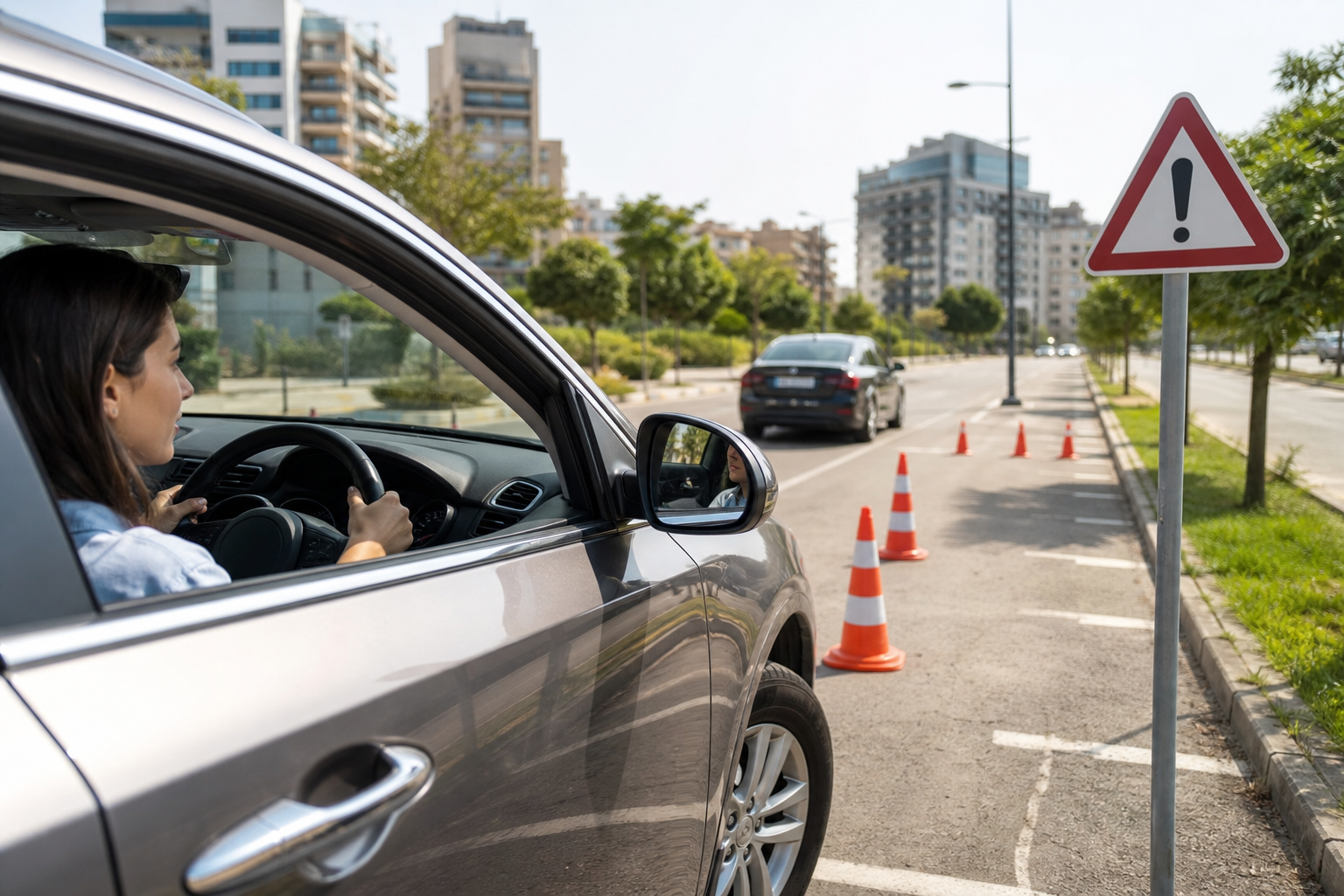
Road safety is not only about passing a driving test. It is a daily responsibility shared by drivers, passengers, motorcyclists, cyclists and pedestrians. Lebanon’s roads can change quickly from busy urban streets to narrow mountain roads, while traffic, weather, lighting and road surfaces may vary during the same journey. Safe driving means observing the road, anticipating risks and choosing a speed and position that allow time to react.
This guide provides practical advice for new and experienced drivers. It is educational and should be used together with current official Lebanese traffic information and professional instruction. For structured preparation, explore Karim Driving School’s driving courses and the school’s resources on the Lebanon driving theory test and traffic signs.
Why road safety matters
A safe driver reduces the likelihood and severity of collisions by managing speed, space, attention and visibility. Many dangerous situations develop because a driver follows too closely, looks at a phone, enters a bend too quickly or assumes that another road user has been seen. Defensive driving means expecting that other road users may make mistakes and leaving enough time and space to respond without sudden, aggressive action.
Manage space and speed
Keep a safe following distance
Do not measure distance by the number of car lengths alone. Choose a fixed roadside object, such as a sign or tree, and count the time between the vehicle ahead passing it and your vehicle reaching it. Leave more time in rain, darkness, heavy traffic, on dusty or slippery surfaces, and behind motorcycles, buses or large vehicles that limit your view. If the vehicle ahead brakes and you must brake immediately, you were probably following too closely.
Adapt speed to conditions
A posted speed limit, where applicable, is not always the safest speed for every moment. Reduce speed before bends, junctions, pedestrian areas, roadworks, steep descents, poor surfaces and locations where parked vehicles hide people. In rain or fog, drive at a speed that allows you to stop within the distance you can clearly see. Smooth speed changes give other road users more time to understand your intentions.
Protect everyone inside the vehicle
Seat belts
Every occupant should use a correctly positioned seat belt on every trip. The lap belt should sit low across the pelvis, while the shoulder belt should cross the chest rather than the neck or arm. Do not place the shoulder belt behind your back or under your arm. Check that children and passengers have fastened their belts before moving, and follow current official guidance for child restraints appropriate to a child’s size and age.
Child passengers
Children need particular protection because an adult belt may not fit them correctly. Use an appropriate, properly installed child restraint and keep young passengers away from doors and unsecured objects. Never leave a child alone inside a parked vehicle. Because requirements and approved restraint guidance can change, confirm current information with the relevant official authority or a qualified safety professional.
Use mirrors, signals and blind-spot checks
Before moving off, check the interior mirror and both side mirrors, signal early when needed, and make a brief shoulder check for the blind spot immediately before changing position. Mirrors do not show every area beside or behind the vehicle. A signal communicates an intention; it does not give priority. Cancel the signal after completing the manoeuvre and continue checking for motorcycles, bicycles and pedestrians.
Changing lanes safely
- Check the road ahead and confirm that the new lane is suitable.
- Check mirrors, signal clearly and recheck the blind spot.
- Move progressively without forcing another vehicle to brake.
- Keep a steady speed and cancel the signal once established in the lane.
Avoid changing lanes repeatedly in congested traffic. If you miss a turn, continue safely and find another route instead of making a sudden manoeuvre.
Overtaking and passing
Overtake only when you can see far enough ahead, have enough space to return safely and can complete the manoeuvre without excessive speed. Check mirrors and blind spots, signal where appropriate and do not pass near bends, crests, junctions, pedestrian crossings or any location where visibility is restricted. Never overtake a vehicle that has stopped to let pedestrians cross. If there is any doubt, wait.
Night driving, rain and poor visibility
Before night travel, clean the windscreen, mirrors and lights. Use headlights appropriately, dim high beams when they could dazzle others, and reduce speed when glare or darkness limits your view. Keep extra distance because hazards and pedestrians may be harder to see.
In rain, avoid sudden braking, steering and acceleration. Increase following distance, use windscreen wipers and ensure the windscreen is not fogged. Standing water can reduce tyre grip and steering control, so slow down before it rather than braking sharply while driving through it. In fog, dust or heavy spray, use the lighting required for the conditions, make yourself visible and postpone the trip when visibility is dangerously low.
Braking and emergency braking
Look well ahead and brake early and progressively for normal stops. Keep both hands ready for steering and avoid harsh inputs that can unsettle the vehicle. In an emergency, look toward the safe escape area, apply firm braking and steer smoothly while maintaining control. Do not rely on the handbrake as a substitute for normal braking, and do not accelerate to escape a hazard unless a trained instructor has taught you a specific controlled manoeuvre.
Remove distractions and manage fatigue
Using a mobile phone while driving takes attention away from the road, whether the phone is held in the hand or being used for messages. Set navigation before departure, silence notifications and stop in a safe legal location if you need to call, read or adjust the route. Eating, searching for objects, loud passengers and complicated controls can also distract you.
Fatigue reduces observation and reaction time. Do not begin a long trip when seriously tired. Take regular breaks, share driving only with an appropriately authorised driver, and stop in a safe place if you yawn repeatedly, lose concentration or cannot remember the last part of the journey. Coffee is not a reliable replacement for rest.
Share the road responsibly
Pedestrians and cyclists
Slow down near schools, shops, bus stops, residential streets and parked vehicles. Look for pedestrians who may cross unexpectedly, especially children and older people. Give cyclists generous clearance, avoid passing when the road narrows and check for them before opening a door or turning. A person walking or cycling may be difficult to see at night or in poor weather, so reduce speed and avoid assuming that visibility means they can see you.
Motorcycles
Motorcycles can be hidden in blind spots and may approach faster than expected. Check mirrors and shoulder areas before changing lane or turning, leave space when following, and never cut across a motorcycle’s path. Motorcycle riders should remain visible, use appropriate protective equipment and position themselves defensively. Drivers can learn more through Karim Driving School’s motorcycle learning course.
Intersections, roundabouts and signs
Approach every intersection ready to slow or stop. Check in all relevant directions, watch for pedestrians and do not assume that another driver will follow the expected path. At a roundabout, reduce speed on approach, observe signs and markings, give way according to the applicable rules and maintain a safe gap. Signal clearly when leaving and check for motorcycles and cyclists alongside you.
Traffic signs and road markings communicate warnings, restrictions, priorities and directions. Learn their meaning rather than relying only on memory of a particular road. Refresh your knowledge with Karim Driving School’s theory-test preparation guide. If a sign or marking is faded or unclear, slow down, avoid guessing and choose the safest legal option.
Parking and difficult roads
Park without blocking traffic, driveways, entrances, emergency access or sight lines. Before opening a door, check for bicycles, motorcycles and passing vehicles. Use the parking brake, secure the vehicle and avoid leaving valuables visible. Practise positioning, reversing and other manoeuvres with the parking and manoeuvres guide.
On narrow roads, mountain roads and steep slopes, slow down before bends and keep to a safe position without driving close to an unprotected edge. Use the horn only as a useful warning where appropriate, not as a replacement for observation. Be prepared for oncoming vehicles, pedestrians, animals, parked cars and vehicles approaching from blind bends. Never stop where you cannot be seen clearly by approaching traffic.
After a minor road incident
First protect people from further danger. Stop in a safe position if possible, switch on hazard warning lights when appropriate and check for injuries. Do not argue in the roadway or move an injured person unless there is an immediate danger. Exchange relevant details calmly, document the scene only when it is safe, and contact emergency services or the appropriate authority when anyone is injured, the road is obstructed or the circumstances require reporting. Follow current official procedures and contact your insurer when necessary. Do not admit liability or make promises before the facts are clear.
Dangerous habits to avoid
- Tailgating, racing to a red light or accelerating aggressively between junctions.
- Using a phone, driving while impaired, or continuing when too tired.
- Ignoring seat belts, carrying unsecured passengers or parking where visibility is blocked.
- Changing lanes without a blind-spot check or overtaking with limited visibility.
- Driving through standing water too quickly or entering a bend faster than you can control.
- Assuming indicators, horns or headlights give you priority.
Checklist before every trip
- Adjust the seat, mirrors and head restraint; fasten your seat belt.
- Check tyres visually, fuel or charge, lights, windscreen and wipers.
- Secure children, passengers and loose items.
- Set navigation and phone functions before moving.
- Consider weather, traffic, visibility and the route.
- Start only when you are alert and fit to drive.
Advice for learner drivers taking the practical exam
Learn the safety routine rather than memorising isolated actions. Before moving, demonstrate proper observation, signalling and control. Practise smooth starts and stops, lane changes, junctions, roundabouts, reversing, parking and hill control in varied traffic and lighting. Check mirrors regularly but keep your main attention on the road. Respond calmly to mistakes: a missed turn is safer than a rushed correction. Ask an instructor to explain the current assessment expectations and practise until safety decisions become consistent. Karim Driving School can help you choose suitable driving instruction and support.
Safe driving is a continuous habit. Leave space, reduce speed when conditions demand it, stay visible and attentive, and treat every road user with patience and respect.