
Safe Driving in Rain and Bad Weather in Lebanon: A Practical Guide
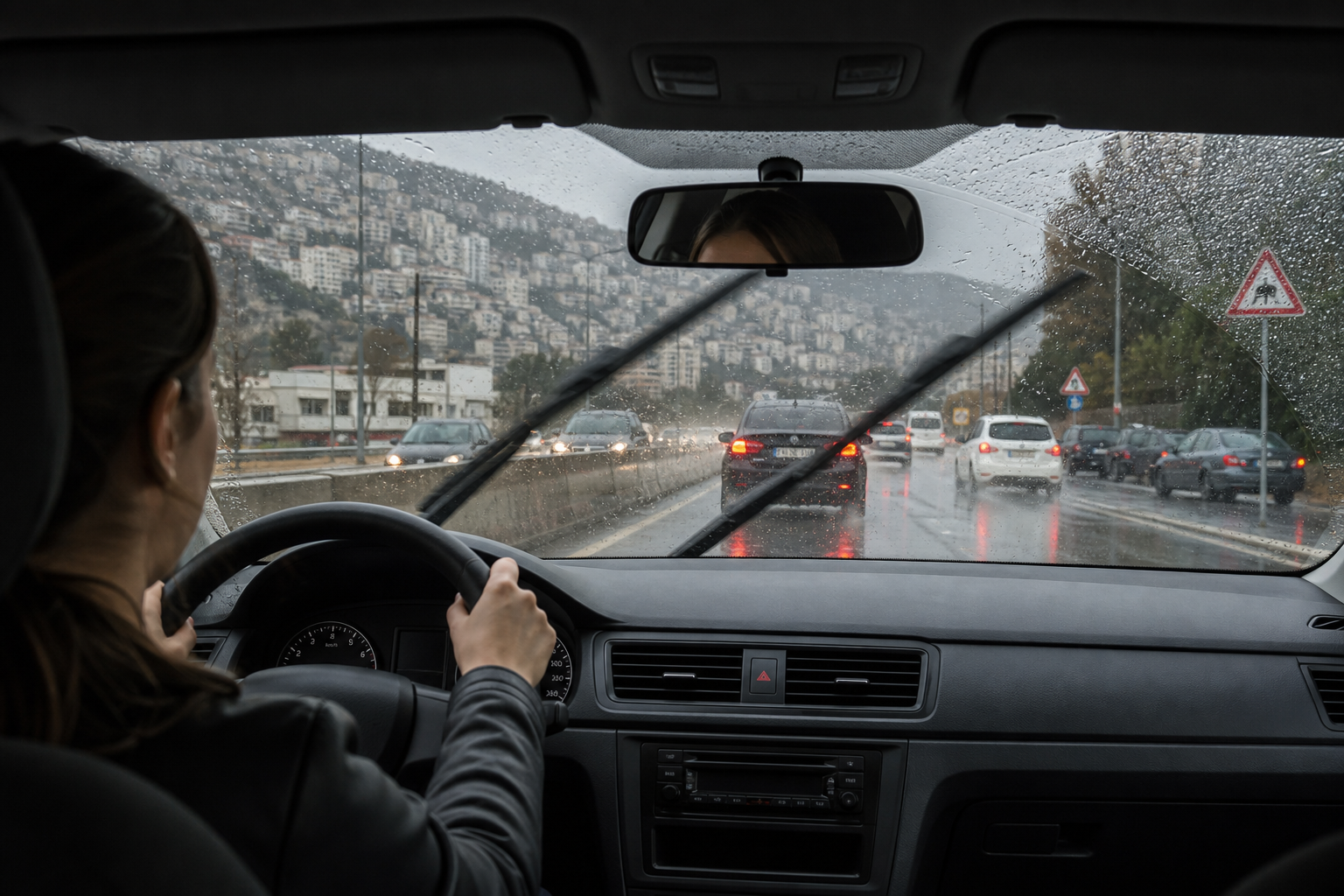
Rain can change road conditions within minutes. Water reduces tyre grip, increases braking distance and makes road markings, signs and other vehicles more difficult to see. In Lebanon, drivers may also encounter steep roads, uneven surfaces, sudden flooding, poor drainage and heavy traffic. Adjusting your speed and driving style is therefore essential for both beginners and experienced drivers.
This guide explains practical ways to prepare your vehicle, drive safely in wet weather and respond to common hazards. It complements the wider advice in our complete road-safety guide for drivers in Lebanon. For additional general road-safety guidance, consult the National Highway Traffic Safety Administration’s driving-safety information.
Why rain makes driving more difficult
A wet surface offers less friction between the tyres and the road. Braking, accelerating and turning must be smoother because abrupt inputs can cause the vehicle to lose stability. Rain can also create reflections, mist and spray from nearby vehicles, reducing your ability to judge distance and speed.
Before driving: check the vehicle
Before setting out in bad weather, inspect the parts that affect grip and visibility:
- Tyres: Check that the tread is in good condition and that there are no cuts, cracks, bulges or objects embedded in the tyre. Worn tread cannot disperse water effectively.
- Tyre pressure: Check pressure when the tyres are cold and follow the vehicle manufacturer’s recommended values. Do not reduce pressure to increase grip; incorrect pressure can make handling and braking less predictable.
- Windscreen and wipers: Clean the glass and replace wiper blades that leave streaks, skip or squeak. Make sure the washer reservoir is filled.
- Lights: Confirm that low-beam headlights, rear lights, brake lights, indicators and hazard warning lights work correctly. Clean dirty lenses.
- Brakes: Any grinding, pulling to one side, unusual vibration or change in pedal feel should be checked by a qualified technician.
- Demisting: Test the heater, ventilation and air conditioning. Clear windows before moving rather than driving with a small visible area.
Wet-road braking and following distance
On a wet road, begin braking earlier and apply the brake pedal progressively. Look well ahead, release the accelerator smoothly and avoid harsh steering while braking. Modern vehicles may have ABS, but ABS does not remove the need to reduce speed or leave space.
Increase your following distance beyond your normal dry-road gap. A useful practical method is to choose a fixed roadside point and count the seconds between the vehicle ahead passing it and your vehicle reaching it. If visibility is poor, traffic is moving quickly or water is collecting on the road, increase the gap further. More space gives you time to react and reduces spray from the vehicle ahead.
How to prevent and handle hydroplaning
Hydroplaning, or aquaplaning, occurs when water separates the tyres from the road surface. The steering may suddenly feel light and the vehicle may fail to respond normally. Speed, worn tyres, incorrect tyre pressure and standing water increase the risk.
To reduce the risk, slow down before entering water, keep both hands on the steering wheel and avoid sudden lane changes. If hydroplaning occurs, remain calm, ease off the accelerator and keep the steering pointed in the intended direction. Do not slam on the brakes or make a sharp turn. As the tyres regain contact, make gentle corrections and continue at a lower speed.
Headlights, visibility and fog
Use dipped headlights when rain, spray or darkness reduces visibility. Daytime running lights alone may not illuminate the rear of the vehicle, so do not rely on them in poor weather. Keep the windscreen, mirrors and lights clean, and use the demister to prevent interior fogging.
In fog, reduce speed and increase your following distance. Use front fog lights only when visibility is seriously reduced and switch them off when conditions improve. Avoid high-beam headlights in fog because reflected light can make the view worse. Do not use hazard lights while moving unless a genuine emergency or sudden obstruction requires warning other road users.
Standing water and flooded roads
Never assume that a flooded section is shallow enough to cross. Water can hide potholes, damaged pavement, open drains or debris, and it may move a vehicle away from its path. If water is rising, flowing across the road or approaching the vehicle’s lower body, turn around when it is safe and choose another route.
If you must pass through a shallow area that is known to be safe, proceed slowly and steadily without stopping in the water. Keep a safe distance from larger vehicles, which can create waves. After leaving the water, test the brakes gently in a safe area because braking performance may temporarily be reduced.
Driving at night in rain
Night rain creates glare from headlights, street lighting and reflective surfaces. Slow down enough to stop within the distance you can see clearly. Keep the windscreen clean inside and out, avoid looking directly at oncoming headlights and use the road edge or lane markings as a guide without drifting toward them.
Do not drive with high beams when they would dazzle other road users. If you are tired, visibility becomes even more difficult; take a break or postpone the journey when possible.
Motorcycle safety in rain
Motorcycles have less stability margin on slippery surfaces. Riders should reduce speed early, avoid abrupt braking or acceleration, keep the motorcycle as upright as possible when crossing painted markings, metal covers or uneven wet surfaces, and increase following distance.
Be especially careful during the first minutes of rainfall, when oil and dust can mix with water and make the surface slippery. Wear a properly fastened helmet, protective clothing and footwear that remains secure in wet conditions. Avoid deep water and do not ride through flooding when the depth or surface cannot be judged.
Common mistakes drivers make
- Driving at the usual dry-weather speed.
- Following closely because traffic is slow.
- Braking sharply or turning suddenly over standing water.
- Using cruise control on a wet or slippery road.
- Driving with worn wipers, poor tyres or dirty lights.
- Using high beams in fog or heavy rain.
- Crossing floodwater without knowing its depth.
- Stopping under unsafe locations or on a road lane to check a phone.
- Continuing when visibility is too poor to control the vehicle safely.
Practical tips for learner drivers
New drivers should practise wet-weather driving with a qualified instructor rather than waiting for an emergency. Learn to brake progressively, scan farther ahead, identify puddles and leave a larger safety margin. Keep both hands positioned securely on the wheel, make one change at a time and communicate early with indicators.
During a lesson, ask the instructor to explain how the car feels when grip is reduced, but never deliberately test loss of control on a public road. If rain becomes severe, pull over only in a legal, visible and safe location, away from moving traffic, and wait for conditions to improve.
Quick FAQ
Should I brake differently in rain?
Yes. Brake earlier and more progressively, while keeping a greater distance. Avoid harsh braking and steering at the same time.
How can I tell if my tyres are unsafe?
Look for worn tread, cracks, bulges, uneven wear or repeated pressure loss. Have concerns assessed by a qualified tyre professional and follow the vehicle manufacturer’s pressure guidance.
What should I do if the car starts to aquaplane?
Ease off the accelerator, keep the steering steady and avoid sudden braking or turning until the tyres regain contact.
Is it safe to cross a flooded road?
Not if the depth, flow or road surface is uncertain. Turning around is usually safer than risking hidden damage or loss of control.
When should I stop driving?
Stop or postpone the journey when visibility, road flooding, vehicle condition or fatigue prevents you from maintaining control safely. Always follow current local warnings and official instructions.