
ADAS Explained: How Driver Assistance Systems Can Make Driving Safer
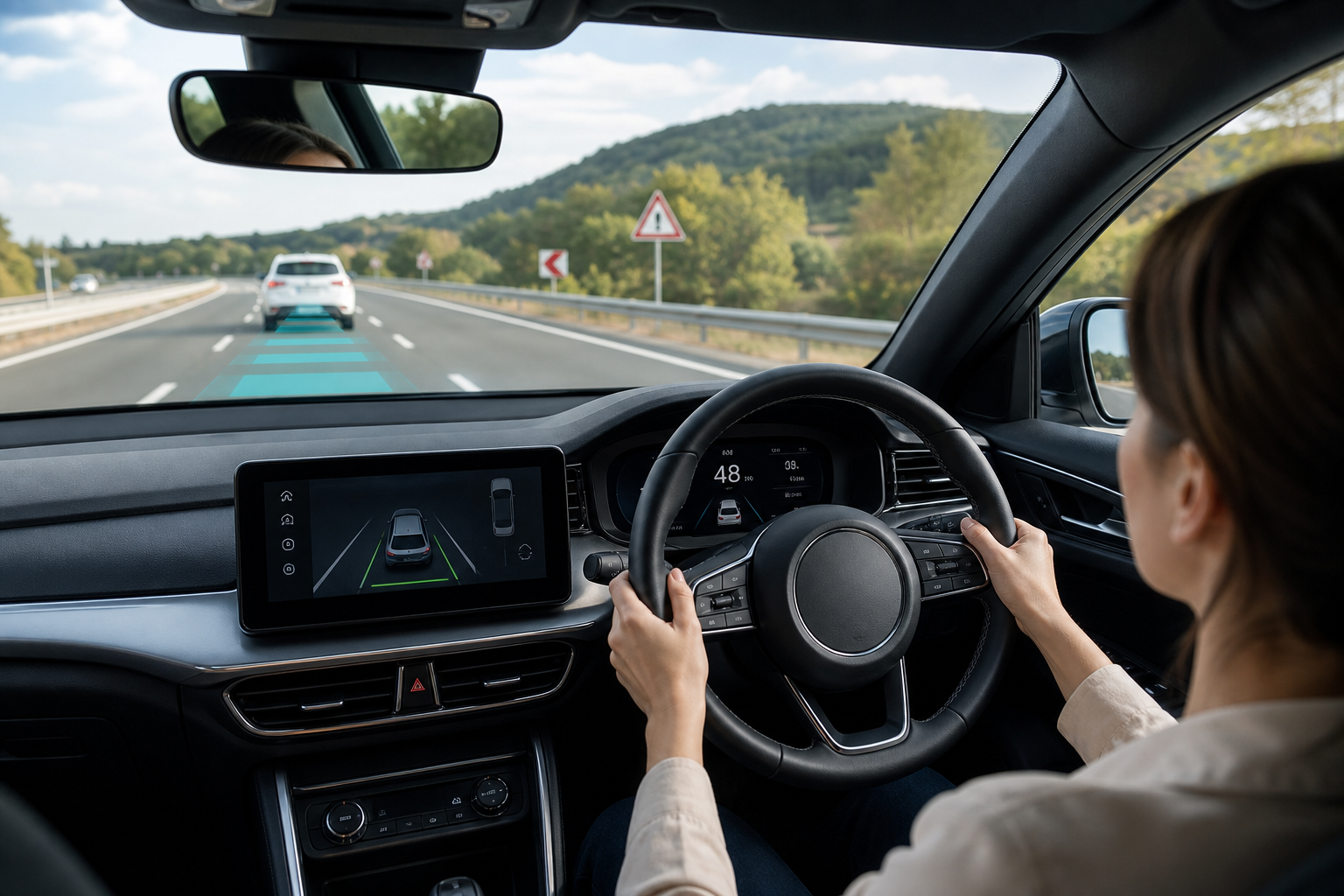
Advanced Driver Assistance Systems, commonly called ADAS, are now found in many modern cars. They can warn you about a vehicle in your blind spot, help you stay within a lane, maintain a chosen following distance, or apply the brakes when a collision appears likely. These technologies can support safer driving, but they do not replace an attentive, responsible driver.
The most important rule is simple: treat ADAS as assistance, not as an automatic chauffeur. You must continue watching the road, controlling the vehicle and responding to traffic conditions. This is especially important in Lebanon, where traffic may be unpredictable, lane markings may not always be clear, and motorcycles, pedestrians and parked vehicles can appear suddenly.
This guide explains the most common ADAS features, their limitations and the habits learner drivers should develop before relying on them.
What does ADAS mean?
ADAS refers to electronic systems that use cameras, radar, ultrasonic sensors or a combination of these technologies to monitor the vehicle’s surroundings. The systems process what they detect and may provide a warning, adjust speed, steer briefly or apply braking, depending on the vehicle and the feature.
ADAS is different from fully autonomous driving. Most systems available to ordinary drivers are designed to assist with a specific task. The driver remains responsible for observing the road and making safe decisions. Features and names vary between manufacturers, so always read the vehicle handbook before using them.
Common ADAS features and how they help
Forward collision warning and automatic emergency braking
Forward collision warning can alert you when the vehicle ahead is closing quickly or when a pedestrian or another obstacle may be in your path, depending on the vehicle. Automatic emergency braking may apply the brakes if the system believes a collision is imminent and the driver has not reacted sufficiently.
These systems are useful when a driver is briefly distracted or when traffic stops unexpectedly. They cannot guarantee that a crash will be avoided. Detection may be affected by darkness, rain, dust, glare, a dirty windshield, unusual objects or a vehicle cutting in very close to you.
Keep a safe following distance and look beyond the vehicle directly ahead. Do not deliberately test the system in traffic.
Lane departure warning and lane-keeping assistance
Lane departure warning alerts you when the car appears to leave a marked lane without an obvious signal. Lane-keeping assistance may make a small steering correction to guide the vehicle back toward the lane centre.
These features depend heavily on visible lane markings. They may work less reliably on roads with faded lines, construction zones, sharp bends or irregular surfaces. In urban areas, drivers may also need to move around parked cars, buses, roadworks or motorcycles. A steering intervention does not mean that the vehicle understands the complete traffic situation.
Signal before changing direction, check mirrors and blind spots, and keep both hands ready to control the steering wheel. Do not fight a necessary manoeuvre simply because the system gives a warning.
Blind-spot monitoring and rear cross-traffic alert
Blind-spot monitoring usually displays a warning in a side mirror or on the dashboard when a vehicle is detected beside or slightly behind you. Some systems also provide an audible warning if you indicate a lane change. Rear cross-traffic alert can warn about vehicles or other road users approaching from the side while you reverse.
These systems do not remove the need for a visual check. They may not detect every motorcycle, bicycle, pedestrian or narrow object. Before changing lanes, use the sequence: mirror, signal, shoulder check, then move only when the space is clear. When reversing, check behind the vehicle directly and reverse slowly.
Adaptive cruise control
Adaptive cruise control can maintain a selected speed and adjust it to keep a programmed gap from a vehicle ahead. It may reduce fatigue on a clear, predictable road, but it is not suitable for every situation.
Traffic entering from side roads, motorcycles moving between lanes, stopped vehicles, sharp bends and heavy rain can challenge the sensors. The system may also maintain a longer or shorter gap than you expect. Keep your attention on the road, know how to cancel the feature immediately and be ready to brake yourself.
Parking sensors and reversing cameras
Parking sensors and cameras make low-speed manoeuvres easier by showing or warning about nearby objects. They are particularly helpful in tight parking areas, but camera images can distort distance. Sensors may not detect low walls, thin poles, open drains or objects outside their detection area.
Use mirrors, turn your head and check around the vehicle before moving. A camera should supplement—not replace—a careful observation routine.
Why ADAS may not work as expected
Drivers sometimes assume that a warning system sees everything. In reality, sensors have a limited field of view and operating range. Heavy rain, fog, dust, mud, direct sunlight and damaged or dirty sensor areas can reduce performance. A windscreen replacement, bumper repair or front-end impact may also affect camera or radar alignment.
Warning messages should be taken seriously. Clean the areas identified in the handbook, avoid covering sensors with stickers or accessories, and arrange a qualified inspection if the vehicle reports a sensor fault. Do not attempt to repair or recalibrate safety systems without the appropriate equipment and knowledge.
Safe ADAS habits for learner drivers
Learn the exact system fitted to your car
Two vehicles may use the same name for systems that behave differently. Learn what each warning means, when the system is available and how to switch it off or adjust its settings. Practise controls while parked, not while moving.
Keep driving attention active
Do not use lane assistance or adaptive cruise control as permission to look at a phone, adjust navigation or become distracted. A driver must still scan mirrors, read traffic signs, anticipate hazards and maintain a safe speed.
Use the system as a prompt, not a command
A warning means you should investigate the situation. It does not always mean that an emergency exists, and silence does not prove that the road is clear. Your observation and judgement remain decisive.
Adjust for local road conditions
On busy Lebanese roads, expect changing lane behaviour, uneven surfaces, sudden stops and mixed road users. Leave extra space, reduce speed when visibility is poor and be particularly careful near schools, markets, intersections and parked vehicles.
Common mistakes and how to avoid them
- Following too closely: Some drivers believe automatic braking will save them. Maintain a proper gap and look ahead.
- Changing lanes without a shoulder check: Blind-spot alerts are not a replacement for observation.
- Trusting a reversing camera alone: Walk around the vehicle when appropriate and reverse slowly.
- Ignoring warning messages: A sensor fault can reduce assistance when you need it most.
- Testing features on public roads: Never provoke emergency braking or steering corrections in traffic.
- Assuming assistance means automation: Keep your hands, eyes and attention ready at all times.
How ADAS relates to driving lessons and tests
Learning to drive still requires fundamental skills: observation, mirror use, signalling, speed control, positioning, hazard awareness and smooth manoeuvres. ADAS can support these habits, but it cannot replace them. During lessons, ask your instructor to explain the features fitted to the training vehicle and how to respond when a warning appears.
For broader road-safety preparation, review Karim Driving School’s practical road-safety guide for drivers in Lebanon. It can complement lessons and theory study by reinforcing observation and defensive-driving habits.
For general information about vehicle safety technologies and their limitations, consult the National Highway Traffic Safety Administration’s safety information. Vehicle manuals and current local guidance should always take priority for your specific car and circumstances.
Frequently asked questions
Can ADAS drive the car by itself?
Most consumer ADAS features assist with one task and do not make the vehicle autonomous. The driver must remain responsible, attentive and ready to intervene.
Should I always leave every ADAS feature switched on?
Follow the vehicle manufacturer’s instructions. Some features may be unsuitable for particular weather, road layouts or driving situations. Even when active, they require supervision.
Can blind-spot monitoring detect motorcycles?
It may detect some motorcycles, but detection is not guaranteed. A shoulder check is still essential before changing lanes or moving sideways.
Why does lane assistance sometimes give a warning when I am avoiding an obstacle?
The system may only recognise the lane markings and may not understand why you are moving away from them. Check that the manoeuvre is safe, signal when appropriate and maintain control.
Does automatic emergency braking work in rain or darkness?
Performance depends on the vehicle, sensors and conditions. Rain, darkness, glare, dirt and poor visibility can reduce detection. Never drive as if the system will always stop the car.
What should I do if an ADAS warning light appears?
Read the handbook, check whether the relevant sensor area is dirty and drive cautiously. If the warning remains, have the vehicle checked by a suitably qualified professional.
Conclusion
ADAS can make driving safer by supporting braking, lane awareness, blind-spot checks, parking and speed control. Its value is greatest when the driver understands its limits and continues to practise strong observation and defensive driving. Keep a safe distance, check mirrors and blind spots, respond to warnings and never allow technology to replace concentration. Good lessons and regular theory revision help you build the judgement needed to use modern vehicle systems responsibly.