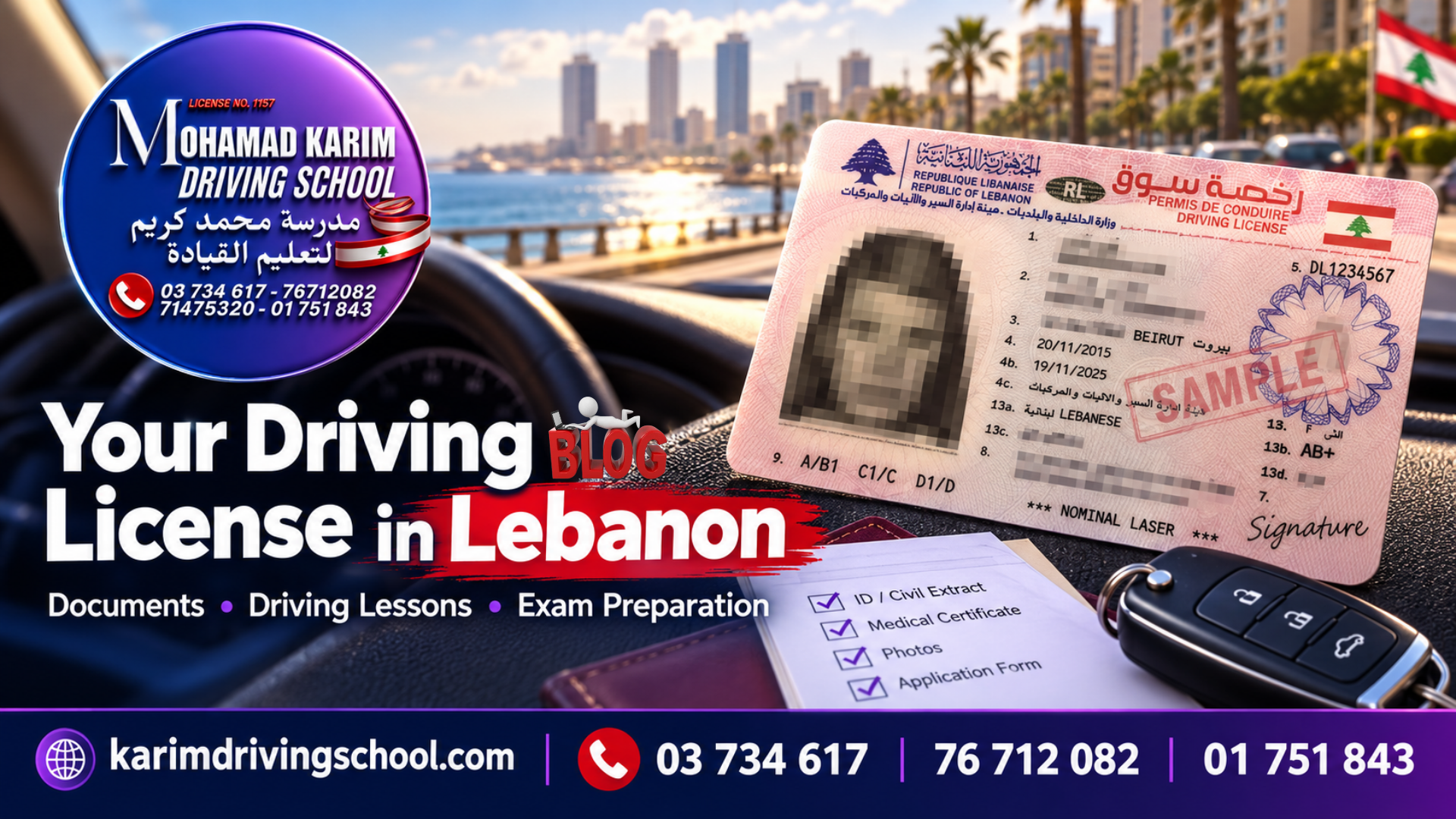
How to Get a Driving License in Lebanon in 2026: A Complete Beginner’s Guide
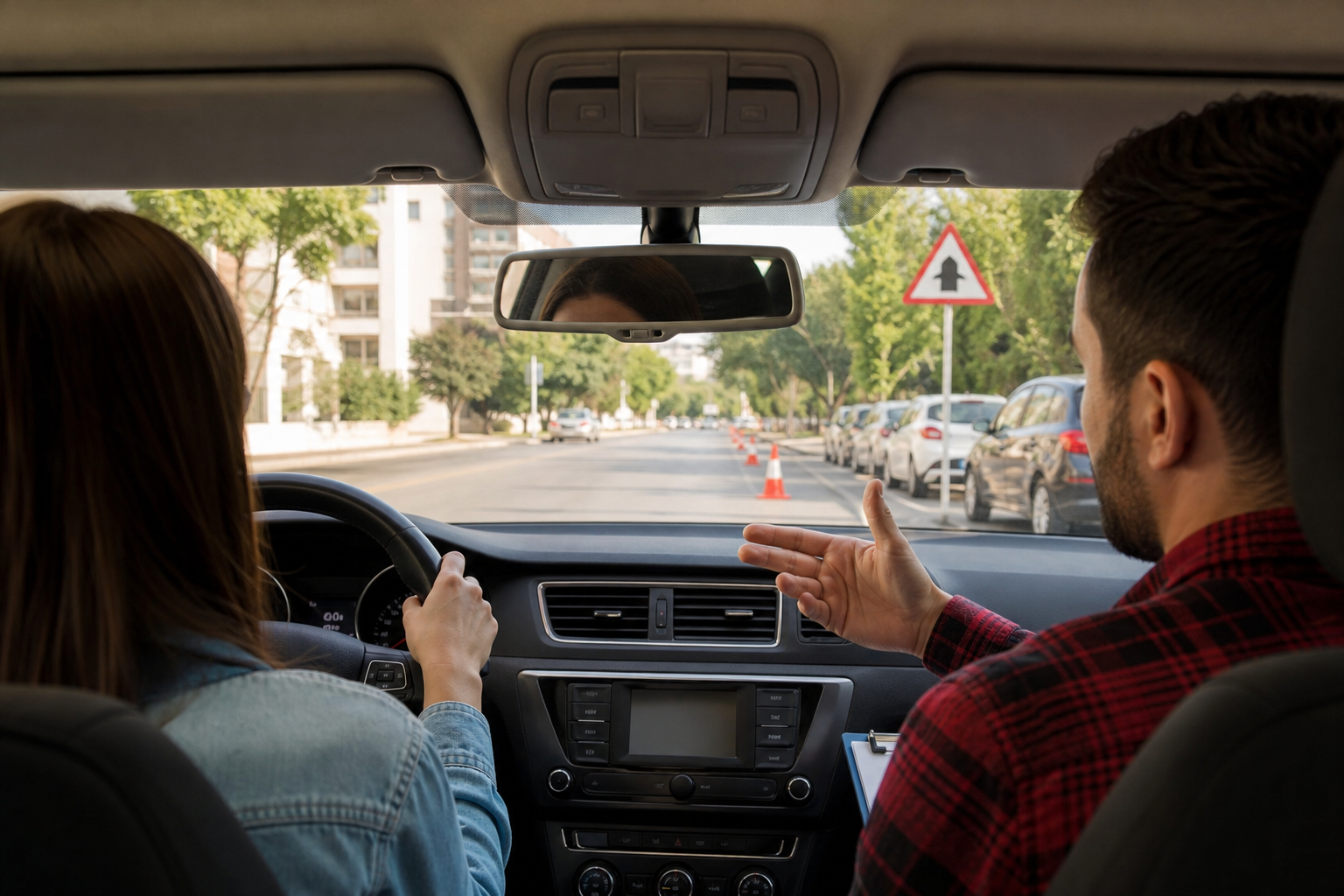
Getting a driving license in Lebanon requires more than learning how to move a car. A new driver must understand the administrative process, study road rules and traffic signs, develop safe driving habits, and demonstrate proper vehicle control during the practical examination. This guide explains the process in a practical way for beginners who are applying for a car or motorcycle license in 2026.
Administrative requirements, examination arrangements, documents, fees and appointment procedures may change. Before submitting an application, confirm the latest information with the relevant Lebanese authorities or the licensing office responsible for your application. A driving school can help you prepare, but it does not replace the official authority that issues the license.
What You Should Understand Before Applying
The exact process can depend on the license category, your personal situation and the current procedures used by the competent authorities. In general, obtaining a license involves:
- Preparing the required identity and medical documents.
- Registering or submitting an application through the current official process.
- Studying road rules, priorities and traffic signs.
- Passing the theory examination, when required for your category.
- Taking driving lessons in the correct type of vehicle.
- Preparing for and taking the practical driving examination.
- Completing any final administrative steps after passing.
Do not rely on old applications, unofficial social-media posts or advice from another applicant without checking whether it still applies in 2026.
Step 1: Choose the Correct License Category
Before studying or booking lessons, decide whether you are applying for a private car license or a motorcycle license. The vehicle category affects the training you need and the skills assessed during the practical exam.
Car license
Car learners normally need to develop observation, steering, braking, lane positioning, turning, stopping, reversing, parking and traffic judgement. If you learn in a manual vehicle, you must also control the clutch, gear changes and hill starts. An automatic vehicle removes clutch and gear-change tasks, but safe observation and traffic control remain essential.
Motorcycle license
Motorcycle learners need a different set of skills, including balance at low speed, controlled acceleration, braking with both brakes, turning, shoulder checks and safe positioning. Protective equipment and motorcycle handling are especially important. A person who can drive a car is not automatically prepared to ride a motorcycle. Karim Driving School also offers motorcycle training for learners who need to prepare for a motorcycle category; you can review the motorcycle riding course in Beirut for more information.
Step 2: Prepare the Required Documents
Document requirements can change according to the applicant’s age, nationality, license category and current administrative rules. Prepare your identity documents and any forms or certificates requested by the relevant authority. Depending on the current procedure, applicants may be asked for documents such as:
- A valid identity document or passport.
- Recent personal photographs in the required format.
- A medical or eyesight certificate, if required.
- Application forms or proof of registration.
- Additional documents for non-Lebanese applicants or special cases, when applicable.
Do not assume that a document used in a previous application is still accepted. Check the current list, document validity periods, photo specifications and required copies before visiting the office. Keep both originals and copies organised in a simple folder.
Step 3: Register for the License Process
Registration may involve submitting documents, paying the applicable official charges, receiving an appointment or completing another procedure specified by the responsible authority. Since appointments and administrative instructions can change, confirm the current process directly before you travel.
When registering, verify the following:
- The license category you selected.
- The spelling of your name and your personal information.
- The location and time of any appointment.
- Whether an original document, copy, translation or medical certificate is required.
- Whether the vehicle used for the practical exam must meet specific conditions.
Keep every receipt, appointment reference and official document connected with your application.
Step 4: Study for the Theory Test
The theory test is not simply a memory exercise. It checks whether you understand how to make safe decisions in common road situations. Study in short, regular sessions instead of waiting until the last few days.
Important theory subjects
- Traffic signs, road markings and traffic lights.
- Right of way at intersections and roundabouts.
- Safe following distance and speed control.
- Overtaking, changing lanes and turning.
- Stopping and parking rules.
- Pedestrian, bicycle and motorcycle safety.
- Driving at night, in rain or with reduced visibility.
- Seat belts, child safety and responsible road behaviour.
Use a structured Lebanon driving theory and traffic-signs preparation resource to revise the meaning of signs and practise applying rules to realistic situations. When you see a question, ask yourself what action is safest and why, rather than trying to remember an answer without understanding it.
Step 5: Learn Traffic Signs by Meaning
Beginners often confuse signs because they focus on shape or colour without understanding the message. Group signs by purpose:
- Warning signs: alert you to a possible hazard or change in road conditions.
- Regulatory signs: impose a restriction, prohibition, priority or obligation.
- Information signs: provide directions or useful road information.
- Road markings: guide lane use, stopping, turning and separation between traffic flows.
For example, at a junction, do not look only for a stop sign. Check the road markings, observe approaching traffic, identify pedestrians and decide who has priority before moving. This same observation habit is important during the practical exam.
Step 6: Take Professional Driving Lessons
Lessons should progress from basic vehicle control to real traffic situations. A useful training plan normally includes:
- Seat, mirror and steering-wheel adjustment.
- Starting, stopping and smooth braking.
- Steering control and correct road position.
- Gear selection and clutch control for manual cars, or smooth acceleration for automatic cars.
- Turns, intersections, roundabouts and lane changes.
- Hill starts, reversing and controlled stopping.
- Urban traffic, narrow roads and varied road conditions.
- Mock examination routes and independent decision-making.
Karim Driving School can help learners combine theory preparation with practical driving lessons, parking practice and examination preparation. Tell your instructor about the skills you find difficult instead of repeating only the exercises you already perform well.
Step 7: Practise Parking and Manoeuvres
Parking is one of the areas where nervous learners lose control of the vehicle. Practise slowly and consistently rather than trying to complete a manoeuvre quickly.
Manoeuvres to practise
- Parallel parking with mirror checks and controlled steering.
- Perpendicular or angled parking where relevant.
- Reversing in a straight line.
- Turning around safely in a limited space.
- Pulling away from the side of the road.
- Stopping at a precise position without touching a kerb or obstacle.
Before reversing, check around the vehicle, use the mirrors correctly and move at a speed that allows you to stop immediately. Do not depend only on a camera or parking sensor. The examiner wants to see observation, control and safety—not speed.
Step 8: Prepare for the Practical Driving Exam
The practical exam assesses whether you can drive safely and responsibly, not whether you can perform a memorised route. The examiner may observe your preparation, control of the vehicle, observation, compliance with signs, interaction with other road users and response to changing traffic conditions.
What to demonstrate
- Adjust the seat and mirrors before moving.
- Use the seat belt and check that the vehicle is ready.
- Check mirrors and blind spots before moving, turning or changing lanes.
- Signal early and cancel the signal when appropriate.
- Maintain a safe, controlled speed.
- Stop correctly at signs, signals and pedestrian crossings.
- Keep a safe distance from other vehicles.
- Use smooth steering, braking and acceleration.
- Complete parking and reversing manoeuvres with patience.
A small mistake does not always mean automatic failure, but unsafe behaviour, loss of control or repeated errors can seriously affect the result. If you make a minor mistake, stay calm, correct it safely and continue following the rules.
Common Reasons Applicants Fail
Insufficient observation
Some learners look straight ahead but fail to check mirrors, blind spots, pedestrians or motorcycles. Make observation visible through deliberate mirror checks and proper head movement where necessary.
Incorrect signalling
Signalling too late, not signalling or signalling without checking can create risk. Signal should support a safe manoeuvre; it does not give you priority by itself.
Poor speed control
Driving too fast reduces reaction time, while driving unnecessarily slowly can also disturb traffic. Match your speed to the road, visibility, traffic and conditions.
Weak clutch or brake control
Manual learners may stall because they release the clutch too quickly. Automatic learners may use the accelerator or brake abruptly. Practise smooth, controlled inputs and learn to stop safely if the vehicle behaves unexpectedly.
Rushing parking manoeuvres
Trying to finish quickly often causes poor positioning, missed observations or contact with a kerb. Slow down, use reference points taught by your instructor and reassess when necessary.
Ignoring road signs and priorities
A learner may know a sign in theory but fail to react correctly on the road. During every lesson, verbalise the situation: identify the sign, check traffic, decide who has priority and act safely.
Practical Tips for Exam Day
- Confirm the appointment, location and required documents in advance.
- Sleep properly and arrive with enough time to avoid unnecessary stress.
- Wear comfortable footwear that allows accurate pedal control.
- Use a vehicle you have practised with and understand.
- Ask your instructor to conduct a realistic mock test before the exam.
- Do not watch other applicants and copy their habits; follow the rules and your training.
- Listen carefully to the examiner’s instructions and ask politely if an instruction is unclear.
- Never take a risky action just to avoid waiting or appearing hesitant.
Final Checklist Before the Examination
- My identity and application documents are ready and valid.
- I have confirmed the latest official appointment instructions.
- I understand priority rules, road markings and the main traffic signs.
- I can start, stop, turn, reverse and change lanes safely.
- I check mirrors and blind spots before every important manoeuvre.
- I can park without rushing and can correct my position safely.
- I can control speed in traffic, on slopes and in limited visibility.
- I have practised in conditions similar to the examination.
- I know whether I am taking a car or motorcycle test and have trained on the correct vehicle.
- I know what to do if I make a minor mistake: remain calm and continue safely.
Frequently Asked Questions
How long does it take to obtain a driving license in Lebanon?
There is no single timetable that applies to every applicant. The time depends on document preparation, the current registration system, appointment availability, your theory preparation and your practical skill level. Confirm current administrative timing with the responsible authority.
Can I prepare without a driving school?
You can study road rules independently, but professional lessons are valuable for vehicle control, parking, observation and correcting unsafe habits. An instructor can also simulate examination situations and identify weaknesses that are difficult to notice alone.
Is a motorcycle license preparation the same as car preparation?
No. Both require knowledge of road rules, but motorcycle training focuses much more on balance, low-speed control, braking technique, protective equipment and vulnerability in traffic.
What if I fail the practical exam?
Ask what skills require improvement, review the current reapplication or retesting instructions with the responsible authority, and take targeted lessons. Repeating the same route without correcting the cause of the failure is usually less effective than focused practice.
How can Karim Driving School help?
Karim Driving School supports learners with theory and traffic-sign preparation, car driving lessons, parking and manoeuvre training, practical exam preparation and motorcycle training. The school provides education and coaching; official applications, examinations and license issuance remain the responsibility of the relevant authorities.
Conclusion
The best way to obtain a driving license in Lebanon in 2026 is to treat the process as both an administrative application and a safety-training programme. Prepare current documents, study the theory, understand traffic signs, practise progressively and take enough lessons to perform parking, manoeuvres and real-road driving calmly. With organised preparation and safe decision-making, beginners can approach the examination with greater confidence and become more responsible road users.