
Night Driving in Lebanon: 12 Essential Safety Tips
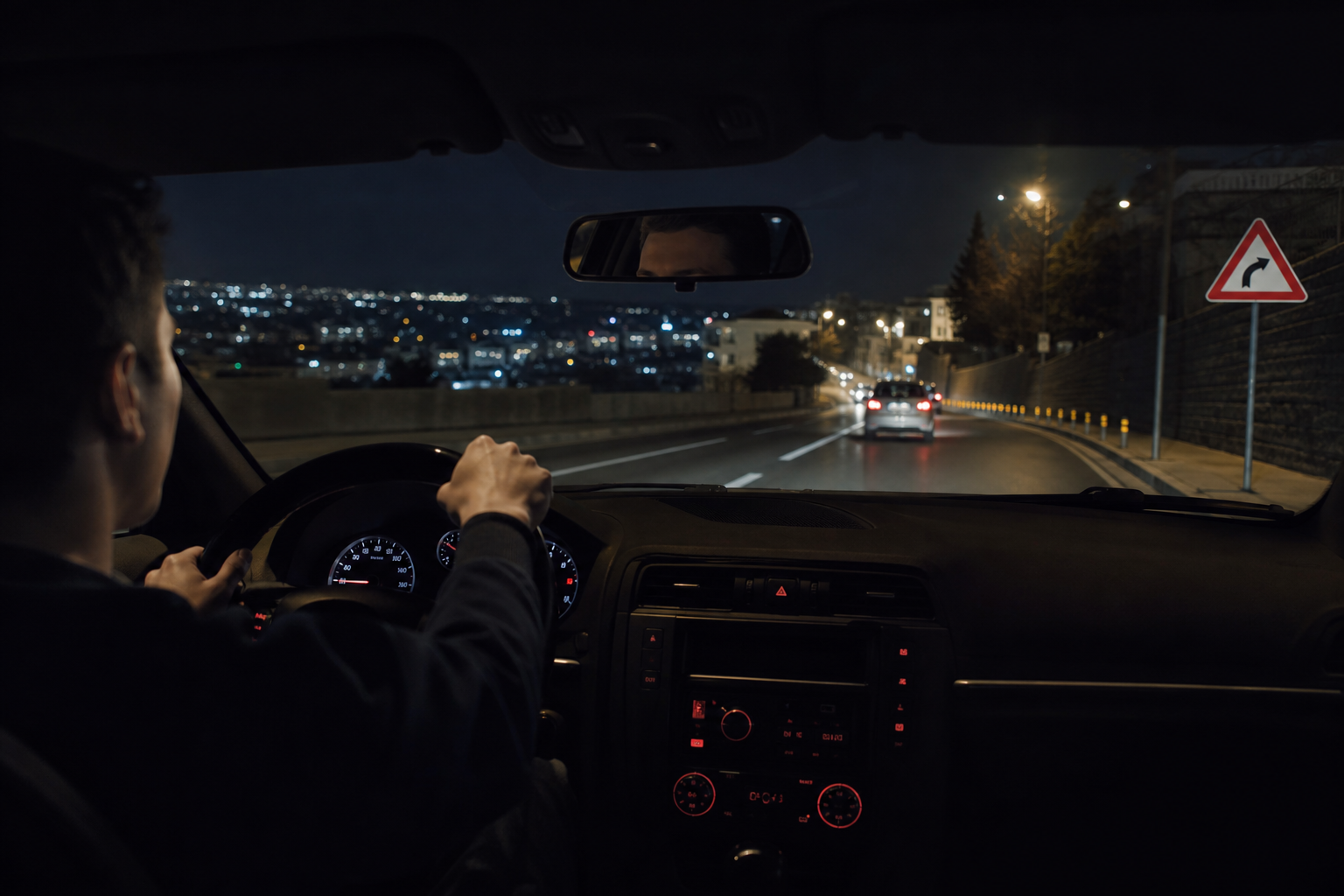
Driving after sunset in Lebanon requires more than simply switching on the headlights. Darkness reduces the distance at which hazards can be detected, while glare, uneven lighting, motorcycles, pedestrians, roadworks and changing road conditions can make decisions more difficult. On a familiar Beirut street, a route around Saida or Nabatieh, a rural road in South Lebanon or a mountain road with sharp bends, a careful driver must constantly adjust speed, vision and road position.
This guide explains how to make night driving safer for learner drivers, licence candidates and experienced motorists. It is educational guidance rather than a statement of Lebanese legislation. Drivers should always confirm current traffic rules and local requirements through the appropriate Lebanese authorities.
Why night driving needs extra attention
At night, your headlights illuminate only part of the road ahead. Unlit objects, dark clothing and vehicles with weak or missing lights may become visible only when they are close. Your eyes also need time to adapt when moving between bright commercial areas and darker streets. In Beirut, for example, a well-lit junction may quickly lead into a darker side road where pedestrians, parked vehicles or motorcycles are harder to see.
Do not assume that a familiar route is automatically safe. Lower visibility can hide a pothole, an obstacle, a damaged road marking or a vehicle entering from an unexpected angle. Treat every night journey as a situation requiring more observation and a larger safety margin.
12 essential night-driving safety tips
1. Use the correct headlights
Use dipped or low-beam headlights when driving in built-up areas, when following another vehicle and whenever an approaching driver could be dazzled. High beams can improve visibility on a genuinely dark, open road, but they should be dipped early before meeting oncoming traffic or cresting a bend where another vehicle may appear.
Never use high beams to pressure a slower driver, and do not look directly at an approaching headlight. Keep your windscreen clean and direct your vision toward the left edge of your lane or the road boundary while maintaining control.
2. Respond calmly to glare
If an oncoming vehicle’s lights are too bright, reduce speed, avoid staring at the lights and focus on a safe reference point near your lane. Keep a steady position without moving suddenly toward the centre or road edge. If the glare is severe, increase following distance and be prepared for a pedestrian, motorcycle or stopped vehicle that was hidden behind it.
3. Choose a speed that matches visibility
The posted speed, where applicable, is not a target that must always be maintained. Choose a speed that allows you to stop within the distance you can see to be clear. Slow down before bends, junctions, pedestrian areas, parked cars and changes in road surface.
Leave more space behind the vehicle ahead than you might during daylight. A larger gap gives you time to react if the lead driver brakes for a pothole, an unlit pedestrian or a motorcycle filtering between vehicles. Avoid tailgating, sudden overtaking and accelerating into areas that your headlights have not yet revealed.
4. Look actively for vulnerable road users
Motorcycles and bicycles can be narrow and difficult to judge at night. A motorcycle may approach between lines of traffic, particularly in busy urban areas, while a bicycle or pedestrian may have limited visibility. Scan beyond the vehicle immediately ahead, check mirrors frequently and pause at crossings or side streets where people may step into the road.
A pedestrian crossing a poorly illuminated road near a rural settlement in South Lebanon may not be visible until the last moment. Reduce speed in places where people are likely to walk, wait for transport or cross between parked vehicles. Never assume that the absence of reflective clothing means the road is clear.
5. Expect potholes, roadworks and unclear markings
Night conditions can make temporary works, uneven surfaces and damaged lane markings difficult to interpret. Watch for cones, barriers, workers, warning lights and unusual vehicle movements. Do not swerve sharply at the last second. Brake in a straight line when possible, check mirrors, and move around an obstacle only when the path is clearly safe.
If a pothole cannot be avoided, reduce speed before reaching it and keep both hands ready on the steering wheel. Avoid driving through deep standing water where the depth is uncertain. A sudden steering input may cause loss of control or place you in the path of another vehicle.
6. Take extra care on mountain roads
Dark, winding routes demand early planning. Before a sharp bend, slow down while the road is still straight, select an appropriate gear and keep within your lane. Do not overtake near bends, crests or narrow sections where you cannot see far enough ahead.
On a mountain route unfamiliar to you, use navigation instructions as assistance rather than as a substitute for observation. A map may show the direction but cannot reliably show a stopped vehicle, fallen object, animal or changing surface. If you miss a turn, continue to a safe place to turn around instead of reversing or making a sudden manoeuvre.
7. Adapt to rain, fog and wet roads
Wet surfaces reflect headlights and street lighting, which can make lane markings and hazards harder to see. Reduce speed, increase the gap ahead and use the lights appropriate to the conditions. In fog, high beams may reflect back and worsen visibility; use low beams and avoid relying on a camera or navigation screen.
Use windscreen wipers and demisting controls early. If visibility becomes too poor to identify the road safely, do not continue simply because you are close to your destination. Find a legal, safe stopping place away from moving traffic.
8. Understand blind spots and camera limits
Mirrors do not show every area beside or behind the vehicle. A motorcycle approaching between vehicles can remain in a blind spot for several seconds. Before changing lanes, check the relevant mirror, signal in good time, perform a careful shoulder check where safe and move only when the space is clear.
Parking sensors and reversing cameras are helpful, but they do not replace direct observation. At night, glare, darkness, rain and dirt on the camera lens can hide a person or object. Reverse slowly and check around the vehicle before moving.
9. Recognize fatigue and microsleep
Long workdays, late lessons and monotonous roads can reduce concentration. Frequent yawning, heavy eyelids, drifting from the lane, missing signs or forgetting the last few minutes of driving are serious warnings. Microsleep can occur without a driver choosing it and may last long enough to cause a collision.
If tiredness appears, slow down and stop at a safe, appropriate location. A short break, water and fresh air may help temporarily, but they are not a substitute for proper rest. Do not begin a night journey if you already feel unable to remain alert.
10. Inspect the vehicle before leaving
Spend a few minutes checking:
- Low-beam, high-beam, indicator, rear and brake lights.
- Tyre condition and inflation, including the spare where applicable.
- Clean windscreen, mirrors, lights and camera lenses.
- Wipers, washer fluid, demisting controls and fuel or battery range.
- Seat position, head restraints, seat belts and unobstructed mirrors.
Ask another person to confirm that the brake lights work, or check their reflection safely. Replace or clean a light that is dim, cracked or obscured. Do not start a trip with a windscreen so dirty or damaged that it creates distracting reflections.
11. Know when to slow down or postpone the trip
Slow down when visibility changes, when traffic becomes unpredictable, near pedestrians, at junctions and before bends. Pull over only in a safe location, well away from the live traffic lane and where other drivers can see you. Avoid stopping on a bend, at a blind crest or in a narrow section.
Postpone a journey when you are seriously tired, the weather prevents you from seeing the road, the vehicle has a critical lighting or tyre problem, or you cannot identify a safe route. Arriving later is safer than continuing with inadequate visibility.
12. Practise a simple observation routine
Use a repeating routine: look far ahead, scan the road edges, check mirrors, identify escape space and reassess speed. At each junction, expect a vehicle, motorcycle or pedestrian to appear. Before moving laterally, signal, check mirrors and confirm the blind spot is clear.
These principles are consistent with the NHTSA safe driving recommendations. NHTSA is a United States road-safety authority, so its material is general safety guidance and not Lebanese traffic legislation.
Lebanon-specific examples
In Beirut, traffic can remain active after sunset. When leaving a brightly lit avenue for a darker side street, reduce speed before the change in lighting and watch for motorcycles approaching between vehicles. Keep enough space to stop if a pedestrian emerges near parked cars or a shop entrance.
Around Saida and Nabatieh, drivers may encounter a mixture of urban traffic, rural stretches and sudden changes in road lighting. On roads in South Lebanon, look farther ahead than the vehicle in front and be especially cautious near settlements, side roads and pedestrian activity.
On mountain routes, a sharp bend may conceal an approaching vehicle or an obstacle. Enter slowly, stay in your lane and never depend on another driver seeing you in time. If you are unfamiliar with the route, plan the journey before departure and avoid using a phone while driving.
Common beginner mistakes
- Driving at the daytime speed even though stopping distance has increased.
- Leaving high beams on when approaching or following another vehicle.
- Looking directly at glare and drifting from the lane.
- Changing lanes using mirrors only.
- Relying completely on a reversing camera or navigation application.
- Continuing despite heavy fatigue or poor visibility.
- Braking or swerving suddenly for a hazard that could have been anticipated.
A practical night-driving scenario
Imagine leaving Beirut after sunset and joining a darker road toward the south. A motorcycle becomes visible near the gap between two vehicles, while a pedestrian begins crossing near an area with limited lighting. The safe response is to release the accelerator, increase the gap, check the mirrors, keep a steady lane position and be ready to stop. Do not accelerate to pass the motorcycle or sound the horn aggressively at the pedestrian. Once the area is clear, continue at a speed that matches the distance illuminated by the headlights.
Frequently asked questions
Should I always use high beams on a dark road?
No. Use them only when the road is sufficiently open and no other road user will be dazzled. Dip them before meeting or following other vehicles and near bends or crests where traffic may appear.
What should I do if glare makes it difficult to see?
Reduce speed, avoid looking directly at the light, keep your lane position and use the road edge as a visual reference. Be ready for hazards hidden behind the glare.
How close should I follow another vehicle at night?
Leave more space than you would when visibility is excellent. The correct gap depends on speed, weather, road surface and your ability to stop within the visible clear distance.
Is a reversing camera enough in darkness?
No. Clean the lens, use the mirrors and look around the vehicle. Cameras have blind areas and may not show a child, pedestrian or low obstacle clearly.
When should I cancel or delay a night trip?
Delay it if you are too tired to remain alert, visibility is severely reduced, or the vehicle has a serious lighting, tyre or windscreen problem. Choose safety over convenience.
Conclusion
Safe night driving in Lebanon depends on preparation, controlled speed, effective observation and the willingness to stop when conditions are not suitable. Check the vehicle, use headlights responsibly, expect vulnerable road users and leave a larger margin for unexpected hazards. To build confidence in real traffic, mountain routes and other practical situations, consider professional driving lessons with Karim Driving School, including preparation for real-road situations and responsible driving.